
Ever feel like your home is constantly running on chaos mode — dishes piling up, counters buried under clutter, and dinner a last-minute scramble? You’re not alone. The solution isn’t working harder. It’s working smarter by building home systems that keep everything flowing with minimal effort.
The right household routines and organizational systems don’t just tidy up a space — they reclaim your time, reduce mental load, and make daily life genuinely enjoyable. Whether you’re managing a bustling family kitchen or living solo, these practical home management strategies will help you get more done while spending less energy doing it.
Why Home Systems Matter for Everyday Living
Running a home is essentially running a small operation. There are meals to prepare, spaces to maintain, people to coordinate, and a constant stream of incoming “stuff” that needs a home. Without structure, it doesn’t take long for chaos to take root.
That’s where intentional home systems come in. They transform reactive scrambling into predictable, repeatable routines — and over time, those routines become habits that require almost no mental energy at all.
A Good Home System:
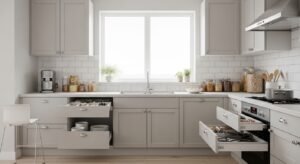
- Saves time by eliminating unnecessary steps and decisions
- Reduces stress because you always know where things are and what comes next
- Creates household flow so every family member can contribute without constant instruction
- Improves efficiency by grouping related tasks and tools together
- Scales with your life — good systems flex when things get busy
The goal isn’t a perfect, Pinterest-worthy home. It’s a functional, calm space that supports how you actually live.
Kitchen Systems: The Heart of the Home
The kitchen is where your home’s energy either flows or stagnates. It’s the hub for meals, conversations, homework, and everything in between. Strong kitchen organization systems here make the whole house feel more manageable.
The Proximity Principle: Less Steps, More Flow
Think about how much time you spend walking across the kitchen to grab something that logically should be right where you’re standing. That inefficiency compounds hundreds of times a week.
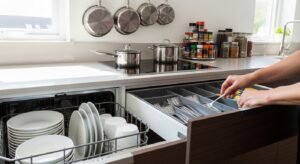
The proximity principle is simple: store things where you use them.
- Keep dishes and silverware near the dishwasher to streamline unloading
- Store pots, pans, and utensils next to the stove
- Place spices in a drawer or shelf immediately adjacent to your cooking zone
- Keep coffee supplies together in one dedicated drink station
- Always stash a fresh trash bag at the bottom of the bin — when the full bag comes out, a replacement is already there
Small positional changes like these can shave hundreds of unnecessary steps from your week without requiring any extra effort.
Creating Stations That Work for You
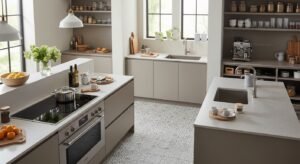
Dividing your kitchen into functional zones is one of the most impactful organizational strategies you can implement. Think of each zone as its own mini-system:
| Zone | What Belongs Here |
|---|---|
| Cooking Zone | Stove, pots, pans, cooking utensils, spices |
| Prep Zone | Cutting boards, knives, mixing bowls, measuring tools |
| Storage Zone | Pantry staples, dry goods in airtight containers |
| Drink Station | Coffee, tea, mugs, water bottles, travel cups |
| Clean-Up Zone | Dish soap, sponges, trash and recycling near the sink |
When everything has a designated place within its relevant zone, you stop wasting time searching — and so does everyone else in the household.
Meal Planning Made Simple
A weekly meal plan is one of the highest-return home systems you can build. It eliminates the daily “what’s for dinner?” spiral and dramatically reduces food waste and impulse grocery spending.
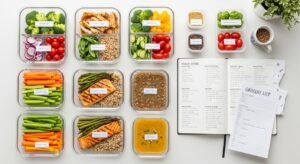
A simple weekly meal planning system:
- Choose a consistent planning day (Sunday mornings work well for many families)
- Check what’s already in your pantry and fridge before writing your plan
- Plan 5–6 dinners and think in terms of ingredient overlap (roast chicken on Monday = chicken tacos on Wednesday)
- Write a master grocery list organized by store section — produce, dairy, proteins, pantry
- Batch-prep on the weekend: wash and chop vegetables, cook a large grain, portion snacks
Batch cooking and prep work pay dividends all week. Cook once, eat multiple times.
Household Flow: Home Systems Beyond the Kitchen
Great home management systems extend beyond the kitchen into every corner of daily life.
Evening Reset: Putting the Kitchen to Bed
An evening kitchen reset — just 10 to 15 minutes — is one of the most powerful daily habits you can establish. When you wake up to a clean, reset kitchen, the entire morning feels different.
Your evening reset checklist might include:
- Wipe down counters and stovetop
- Load and run the dishwasher
- Put away any stray items from the day
- Set out anything needed for tomorrow’s breakfast or lunch
- Take out the trash if needed
This isn’t about deep cleaning. It’s about returning the kitchen to its baseline so the next day starts from a position of calm rather than catch-up.
Managing Drop Zones & Clutter Hotspots
Every home has clutter hotspots — surfaces that seem to magnetically attract random objects. The entry table, a corner of the kitchen counter, the dining room chair. These spots don’t need to be eliminated; they need to be intentionally designed.
A well-organized drop zone gives incoming items a proper landing spot:
- A basket or tray for keys, wallets, and sunglasses near the door
- A paper inbox for mail and important documents (dealt with weekly)
- Hooks for bags and jackets so they don’t migrate onto chairs
- A small basket for each family member’s miscellaneous items
The key is a simple weekly reset of these zones so they don’t snowball into full-on clutter. A 15-minute daily tidy at the end of the evening — clearing tables, counters, and floors — keeps things from getting out of hand between deeper cleaning sessions.
Hosting & Hospitality Systems
Hosting doesn’t have to mean a frantic prep session the day of. With a few smart systems in place, you can have people over without the pre-company stress spiral.
The Party Caddy Trick
Keep a dedicated hosting caddy or bin stocked with everything you regularly need when guests arrive: extra napkins, candles, a lighter, a bottle opener, cocktail napkins, a serving board. When someone’s coming over, grab the caddy — it’s already done.
This removes the last-minute scurry through every cabinet trying to find the corkscrew. Everything lives together, ready to go.
Backstocking Essentials
A backstock system means you never run out of the things you always need. Keep extras of your most-used household staples — coffee, olive oil, paper towels, cleaning supplies — organized in a designated backstock area (a pantry shelf, a closet, or a cabinet).
How it works:
- When you open the last of something, add it immediately to your shopping list
- When you buy a replacement, it goes to the back; the existing one stays in front
- Scan barcodes on empty containers with a grocery app to reorder instantly
This “first in, first out” approach means you’re never caught short, and you always know what you have.
Habits That Keep Home Systems Alive
Systems don’t run themselves — habits do. The good news is that once the right habits are established, they require almost no conscious effort. They just become the way things work in your home.
Batch Work Where You Can
Instead of spreading tasks thin across the week, concentrate them. Do all the laundry in one dedicated day rather than running single loads sporadically. Prep vegetables for multiple meals in one session. Batch-bake bread or muffins that can span several days of breakfasts.
Batching reduces the mental overhead of constantly starting and stopping, and it’s significantly more energy-efficient than fragmenting tasks across your week.
Store with The Lids On
This one small habit makes a surprisingly big difference: store containers with their lids already on, rather than nesting lids and bases separately.
Yes, it takes slightly more cabinet space. But you’ll save enormous amounts of time and frustration not digging for matching lids every time you need a container. It also makes decluttering easier — if you can’t find a lid, the container gets donated.
The Power of Small Routines
Big systems are built from small, consistent routines. Consider anchoring micro-habits to things you already do every day:
- While coffee brews: Wipe the counter, empty the dishwasher
- After dinner: Run a 10-minute kitchen reset
- Sunday afternoon: Meal plan and grocery list prep
- Friday evening: Clear out the week’s clutter from drop zones
These anchored routines take the decision-making out of maintenance. They become automatic — and that’s exactly the point.
Simplify Home Systems to Thrive
The real goal of home systems isn’t a cleaner house — it’s a freer life. When your home runs smoothly, you spend less mental energy managing it and more time doing what you actually love: cooking meals with your family, hosting friends without stress, or simply enjoying a calm evening at home.
Start small. Pick one area — your kitchen zones, your evening reset, your drop zone — and build from there. One good system, maintained consistently, creates momentum for the next. Before long, your home is working for you, not the other way around.
The home you want isn’t about perfection. It’s about flow.
FAQs
What is a home system?
A home system is a repeatable routine or organizational structure that makes everyday household tasks predictable, efficient, and easy to maintain with minimal effort.
How do I start creating home systems?
Start with your biggest pain point — usually the kitchen or laundry — and identify one small change that removes unnecessary steps. Build from there.
How long does it take for home systems to become habits?
Research suggests habits typically form within 21 to 66 days of consistent practice. The simpler the system, the faster it sticks.
What is a drop zone in home organization?
A drop zone is a designated spot near the entryway where everyday items like keys, bags, and mail have a consistent home, preventing clutter from spreading throughout the house.
Can home systems work for large families?
Absolutely. In fact, they’re even more valuable for larger households, as they distribute responsibility and reduce the mental load on any one person.
What is the proximity principle in kitchen organization?
The proximity principle means storing items where you actually use them — pots near the stove, dishes near the dishwasher — to reduce unnecessary movement and save time.
How does meal planning save time and money?
Meal planning eliminates daily decision-making about dinner, reduces food waste by using ingredients intentionally, and prevents costly last-minute takeout runs.
Conclusion
Simplifying your home doesn’t require a complete overhaul or a perfectly curated space. It requires intentional systems — small, smart structures that make your daily routine predictable and your home genuinely pleasant to live in.
From the proximity principle in your kitchen to an evening reset routine, from a hosting caddy to a weekly meal plan, every system you build is an investment in your time, energy, and peace of mind.
Start with one. Stay consistent. Let the habits do the work. Your simplified, thriving home is closer than you think.